

Are you still wondering about calculating and interpreting retained earnings? Here’s why retained earnings are important, and how they can impact your decision-making and opportunities. In a lot of cases, both spouses can contribute to the business in one way or another.
What’s the difference between retained earnings and common stock?
This is the case where the company has incurred more net losses than profits to date or has paid out more dividends than what it had in the retained earnings account. Find your retained earnings by deducting dividends paid to shareholders from the sum of your old retained earnings balance and net income (or loss) for the current period. Now your business is taking off and you’re starting to make a healthy profit which means it’s time to pay dividends. The Book Value Method calculates a company’s valuation based on its balance sheet by considering shareholders’ equity after deducting intangible assets.
Applications in Financial Modeling
Deferred revenue represents revenue that has been received but not yet earned. It is recorded as a liability on the balance sheet and as revenue on the income statement. When the https://drsedighzadeh.com/2020/07/14/kpmg-kansas-city/ revenue is earned, the deferred revenue account is closed, and the revenue account is credited. The first step is to determine the date on which the revenue accounts will be closed.
What is a Balance Sheet?
Because that profit has been reinvested—into inventory, equipment, unpaid invoices (accounts receivable), or paying down debt. To simplify your retained earnings calculation, opt for user-friendly accounting software with comprehensive reporting capabilities. There are plenty of options out there, including QuickBooks, Xero, and FreshBooks. Shareholders, analysts and potential investors use the statement to assess a company’s profitability and dividend payout potential. When a company normal balance consistently experiences net losses, those losses deplete its retained earnings.
- The Market Valuation Method determines the value of a pvt ltd company by comparing it with similar businesses in the industry.
- Since private companies are not listed on the stock exchange, their value is calculated using different methods like assets, earnings, and market trends.
- Saxo does not guarantee the accuracy or completeness of any information provided and assumes no liability for any errors, omissions, losses, or damages resulting from the use of this information.
- Use these tips to improve business management skills, enhance employee engagement, and build a stronger foundation for organizational success.
- It is a key indicator of a company’s ability to generate sales and it’s reported before deducting any expenses.
- If you’re still calculating retained earnings in Excel, you’re one formula error away from a reporting headache.
- Note that certain states may have different methods of calculating overtime for piece-rate workers.
Conversely, a decreasing trend in retained earnings could signal financial troubles or reduced growth potential, posing risks for potential investors. To calculate the beginning retained earnings value, you must refer to the previous financial period’s ending retained earnings balance. Starting retained earnings can be found in the equity section of the company’s balance sheet. In case of a new company or the first financial period, the beginning retained earnings are usually set at zero. Retained earnings represent a crucial component of a company’s financial health and strategic planning. This comprehensive guide explores the concept of retained earnings, its calculation, significance, and impact on business finances.

Retained earnings appear under the shareholder’s equity section on the liability side of the balance sheet, and often companies will show this as a separate line item. Retained earnings are like a running tally of how much profit your company has managed to hold onto since it was founded. They go up whenever your company earns a profit, and down every time you withdraw some of those profits in the form of dividend payouts. So the retained earnings calculation is one indicator of a business’s financial health, but it isn’t the whole story. Negative retained earnings may be a reflection of a company’s financial performance. If there were no dividends paid out, you don’t need to do any other adjustments from step two.
- The difference between what you bring in (revenue) and what you spend (expenses) is your net income.
- In simpler terms, these accumulated profits are the ones that you will keep for your business growth instead of paying off debts.
- A high yield can sometimes result from a declining stock price, which could signal underlying financial issues.
- That’s your beginning retained earnings, profits or losses for the period, and your dividends paid.
- It’s much like finding a starting balance before you engage yourself in doing the math.
Information on our international website (as selected from the globe drop-down) can be accessed worldwide and relates to Saxo Bank A/S as the parent company of the Saxo Bank Group. Any mention of the Saxo Bank Group refers to the overall organisation, including subsidiaries and branches under Saxo Bank A/S. Client agreements are made with the relevant Saxo entity based on your country of residence and are governed by the applicable laws of that entity’s jurisdiction. All trading and investing comes with risk, including but not limited to the potential to lose your entire invested amount.
- After paying off debts, shareholders, and liabilities, your company may want to invest in fixed assets.
- In such cases, the company may be investing heavily in expenses like R&D to grow.
- At the same time, paying cash dividends decreases shareholders’ equity because it affects the company’s assets.
- Otherwise, subtract the full amount of dividends paid from the amount calculated in step two.
- How you should use your retained earnings depends on your business stage.
- When your business earns a surplus income you have two alternatives, you can either distribute surplus income as dividends or reinvest the same as retained earnings.
- Retained earnings are actually reported in the equity section of the balance sheet.
- Not sure if you’ve been calculating your retained earnings correctly?
- They are cumulative earnings that represent what is leftover after you have paid expenses and dividends to your business’s shareholders or owners.
- To close the revenue accounts, create a closing entry that debits each revenue account and credits an income summary account.
- Earnings per share (EPS) is the most commonly used metric to describe a company’s profitability.
Check if your accounting tool is on accrual basis (GAAP-compliant) while you’re calculating on cash how to calculate retained earnings basis. Also, some platforms cache data—try refreshing reports or rebuilding your dataset. Not because the math is hard, but because the concept sits at this weird intersection of profit, cash flow, and equity that most business guides gloss over. It can go by other names, such as earned surplus, but whatever you call it, understanding retained earnings is crucial to running a successful business. An accumulated deficit is when a company’s debts total more than its reported earnings on a balance sheet. With less debt, you should be able to borrow greater loans, pay the money back at a lower interest rate, and grow your business.
PP&E, Capital Expenditures (Capex) and Depreciation Expense
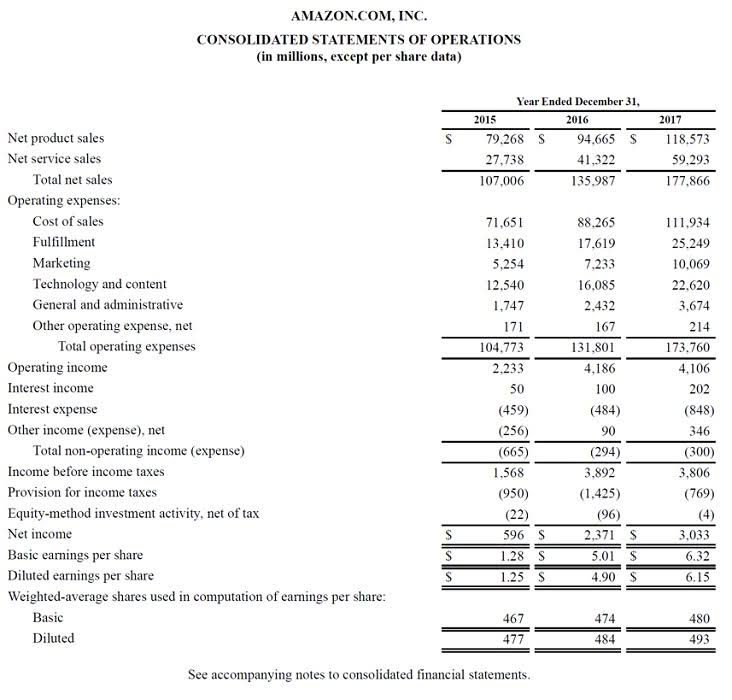
An income statement shows the company’s revenue and expenses over a specific period, while a balance sheet shows the company’s assets, liabilities, and equity at a specific point in time. Closing revenue accounts affects the retained earnings account, which is reported on the balance sheet. A company’s equity reflects the value of the business, and the retained earnings balance is an important equity account. To make informed decisions, you need to understand how financial statements like the balance sheet and the income statement impact retained earnings. Enerpize simplifies the process of calculating retained earnings on a balance sheet by automating key financial tasks. This eliminates manual errors, ensuring accuracy and saving valuable time.
Retained earnings formula

As a crucial component of the shareholders’ equity, understanding retained earnings can provide critical insights into a company’s financial health and help investors make informed decisions. By understanding the relationship between retained earnings and financial statements, business owners and investors can gain valuable insights into a company’s financial health. Reporting retained earnings accurately helps in making informed decisions, ensuring long-term growth and stability.